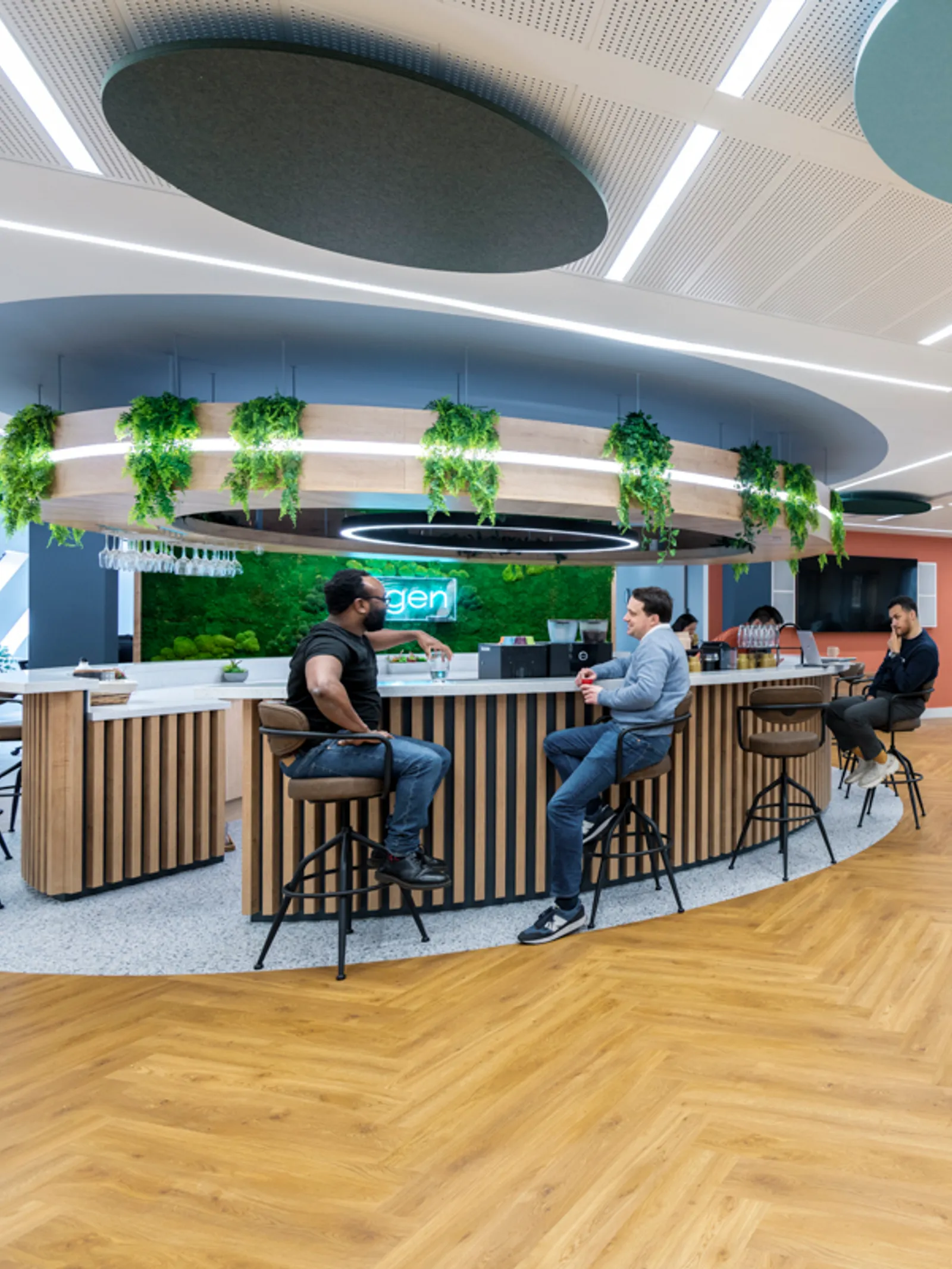


Emerging Trends from Clerkenwell Design Week 2026
Clerkenwell Design Week has always been a useful marker for where the workplace is heading next. This year, the message was clear: design is becoming warmer, more tactile, more responsible and more human.
Across furniture, finishes, fabrics and lighting, our design team saw a shift away from overly polished workplace schemes and towards spaces that feel grounded, comfortable and built to last. The strongest themes were natural materiality, richer colour, circular design, comfort-led furniture and softer, more organic forms.
Together, they point to a wider movement in workplace design: the office is borrowing more from hospitality. Not to make workplaces feel like hotels, but to create spaces where people feel welcome, supported and encouraged to spend time together.
Natural materiality takes the lead
One of the clearest trends from Clerkenwell was the move towards natural materials, or materials that bring a more natural look and feel into the workplace.
Muted tones, timber finishes, tactile surfaces and earthy palettes appeared across a wide range of products. There was a clear move away from cold, flat finishes and towards schemes with more texture, warmth and depth.
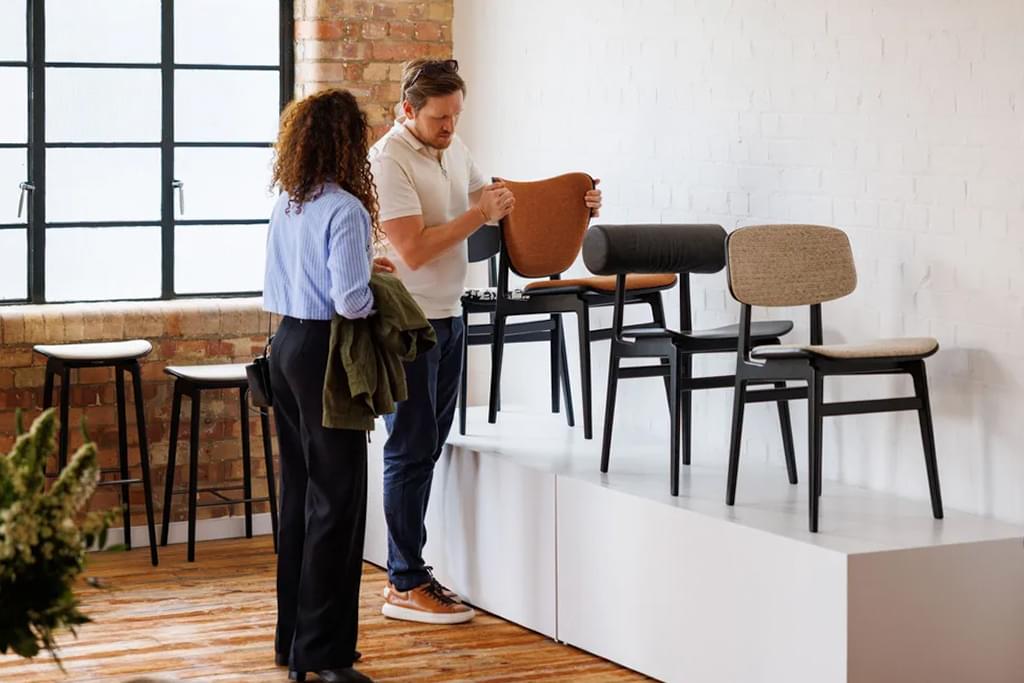
For Caitlin Goble, Project Designer at Area, this was one of the strongest signals from the event:
“The general stand-out feeling for me was the sense of an increase in use of more natural materials. Much more muted tones and natural materiality.”
This direction reflects a broader desire for office design that feels calmer and more considered. Natural materials can help soften the built environment, add visual warmth and create a stronger connection between people and place.
Reuse, recycling and a renewed focus on craft
Sustainability was not presented as a separate conversation at Clerkenwell. It was built into the products, materials and stories on show.
Reused and recycled materials were everywhere, with more manufacturers exploring how waste streams can be turned into new surfaces, textiles, furniture and finishes. The focus was not only on reducing the use of virgin materials, but also on creating products with a sense of purpose and longevity.
As Caitlin noted:
“Re-use of materials and recycled products being made into new products instead of using virgin materials was everywhere, and it felt like there was generally a feeling of more craftsmanship.”
This is an important shift. Circularity is no longer just about the environmental credentials of a product. It is also shaping the look and feel of workplace interiors. Recycled materials often bring texture, irregularity and character, creating spaces that feel less manufactured and more crafted.
For clients, this opens up new opportunities to make sustainable office design choices without compromising on design quality.
For a deeper look at this approach, explore our guide to the circular economy in office fit out and office design.
Warm neutrals meet deeper accent colours
Colour was another clear talking point. Neutral palettes remain important, but they are becoming warmer and richer.
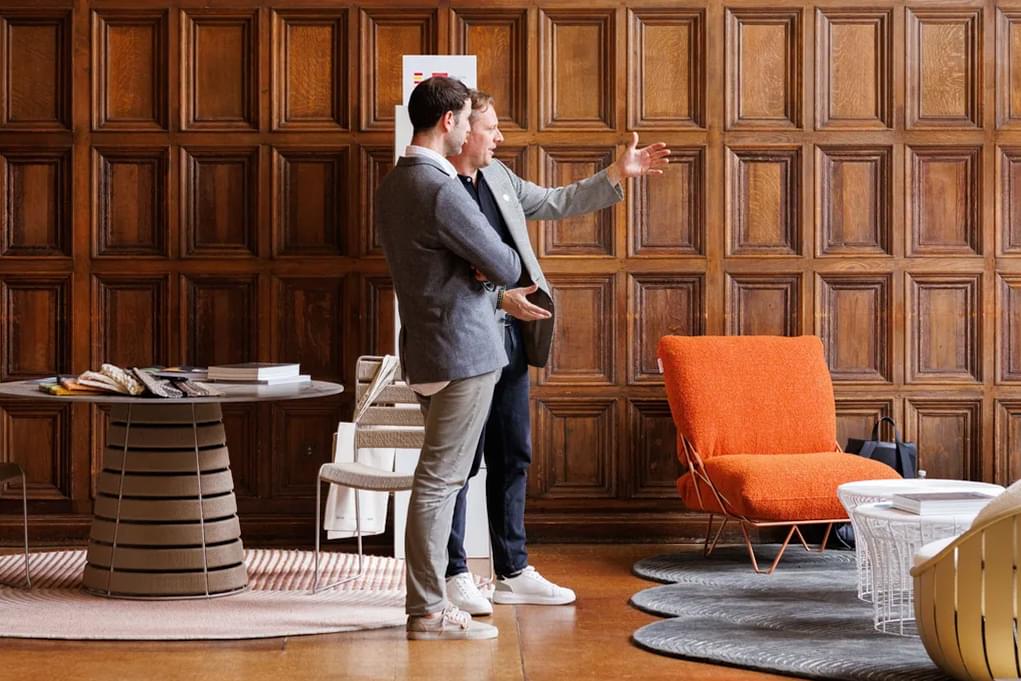
Lauren Garreau, Senior Designer at Area, saw a strong emphasis on warm creams, natural wood finishes and earthy tones as the base for many schemes. These softer foundations were often paired with deeper accent colours, including burgundy, oxblood, terracotta and forest green.
This palette feels calm but not flat. It gives workplace interiors a sense of depth, while still feeling accessible and timeless.
The same direction was also visible in fabric launches, with new collections centred around warm neutrals and jewel-toned accents. This shows how colour trends are moving across furniture, soft furnishings and wider interior schemes, creating a more joined-up design language.
Colour drenching adds depth
Alongside the rise of warmer palettes, colour drenching was also visible across Clerkenwell.
Rather than using colour as a single accent, this approach layers one colour family throughout a space. Walls, upholstery, furniture and finishes sit within the same spectrum, creating a more immersive and cohesive environment.
Lauren noted one example where a deep burgundy-brown upholstered armchair was paired with a lighter textured sofa and walls painted in complementary shades. The result was a space that felt rich, layered and calm, rather than loud or overly designed.
For workplace interiors, this approach can be useful in lounges, focus areas, meeting rooms and hospitality-inspired settings. It gives spaces a clear identity while keeping the overall scheme controlled.
Pattern returns to fabrics
At Clerkenwell, fabrics showed more confidence, with bolder patterns appearing alongside textured weaves and softer neutrals. This does not mean a return to busy or overwhelming workplace interiors. Instead, pattern is being used with more control.
It can bring energy to a setting, define zones and add personality without relying on strong colour alone. In the workplace, patterned fabrics can be especially effective on feature seating, cushions, curtains, acoustic products or smaller upholstery pieces.
This renewed interest in pattern also links back to the wider theme of craft. Pattern gives products a more tactile, designed feel and helps create spaces that feel less generic.
Comfort-led furniture comes into focus
Comfort was one of the strongest furniture themes at Clerkenwell.
Many collections featured larger, more substantial pieces, with deep seats, soft upholstery and generous proportions. The emphasis was on furniture that feels inviting, not just visually refined.
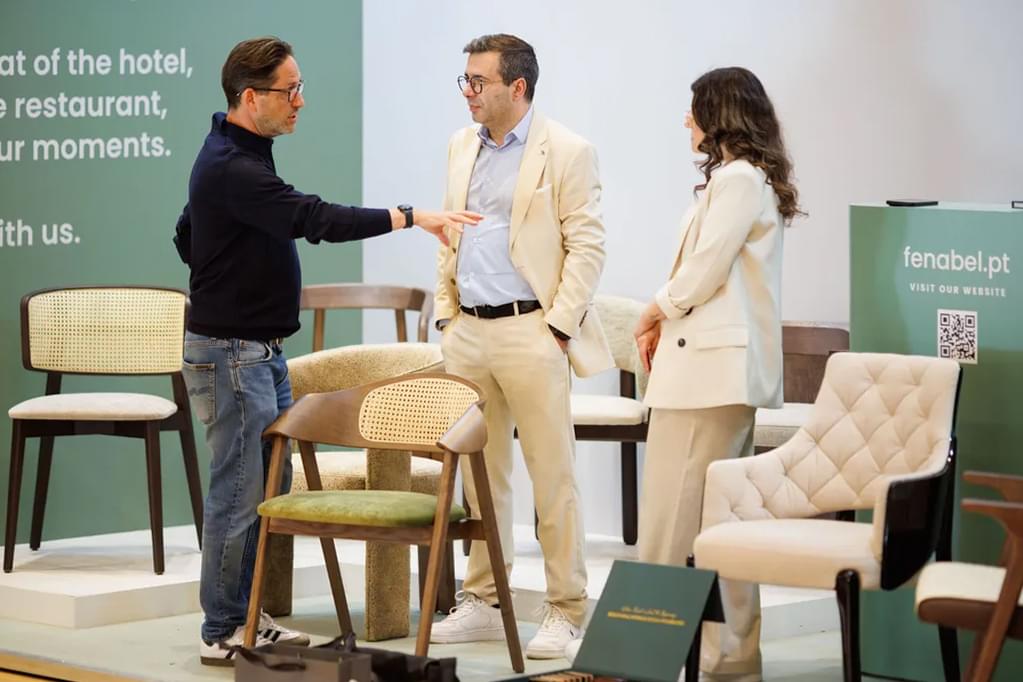
Lauren observed a move towards solid, grounded bases rather than slim or elevated legs. This gave pieces a sense of stability and permanence, while also making them feel more relaxed and approachable.
This matters because the role of the office has changed. Workplaces now need to support focus, collaboration, social connection and informal conversation. Comfort-led furniture is becoming a key part of a modern office fit out, helping teams create settings where people want to pause, talk, think and spend time.
It is not about making the workplace casual for the sake of it. It is about designing for the way people behave.
Organic shapes soften the workplace
Organic forms were another recurring feature across furniture, lighting and acoustic solutions.
Rounded edges, curved silhouettes and flowing forms appeared throughout the event, helping to soften the harder lines of architecture and workplace planning. These shapes can make spaces feel more welcoming and less rigid, while supporting a more human-centred design approach.
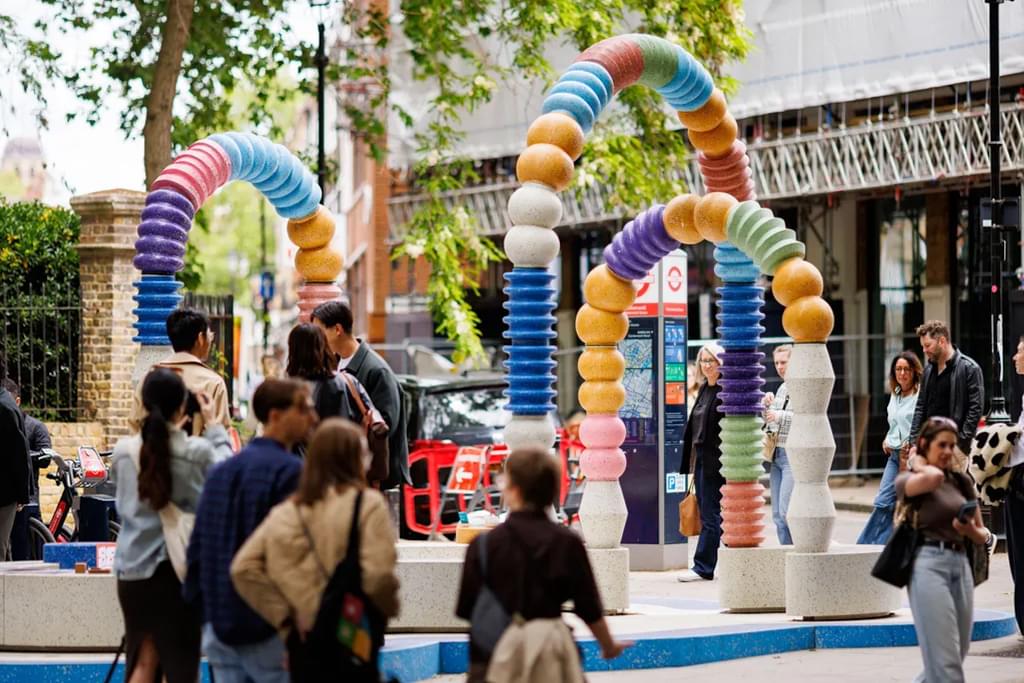
In practical terms, softer forms can help balance open-plan environments, create a sense of movement and make shared spaces feel more relaxed. They work well in reception areas, lounges, collaboration settings and breakout spaces where the aim is to encourage people to connect.
Combined with warm materials and richer colours, these organic shapes point to a workplace that feels less corporate and more personal.
The workplace takes cues from hospitality
The thread running through all these trends is hospitality.
Warm palettes, crafted materials, comfortable furniture, layered textures and organic shapes all contribute to spaces that feel more welcoming. This does not mean every office needs to look like a members’ club, restaurant or hotel lounge. But it does mean the workplace needs to work harder as an experience.
As Lauren put it, these trends all lead back to “a hospitality approach to workplace design”.
That approach is about understanding how people feel in a space. It considers arrival, comfort, mood, materiality, lighting, acoustics and the quality of shared moments. It also recognises that the office has to earn its place in people’s working lives.
A successful workplace is no longer judged by how many desks it can fit. It is judged by how well it supports people, culture and performance.
What this means for workplace design
The trends from Clerkenwell Design Week show a clear shift towards workplaces that are more human, more responsible and more emotionally aware.
Natural materials are bringing calm and tactility. Recycled products are supporting circular design. Warm colour palettes are adding depth. Pattern is bringing personality back into fabrics. Comfort-led furniture is making the office more inviting. Organic shapes are softening the workplace experience.
For businesses planning an office fit out, the opportunity is to bring these ideas together with purpose. The best results will come from spaces that are not only visually current, but also aligned with how people work now – and how they will work next.
Clerkenwell showed us that the future workplace is not colder, faster or more complex. It is warmer, more considered and more human.
To explore how these trends could shape your next workplace, please get in touch.