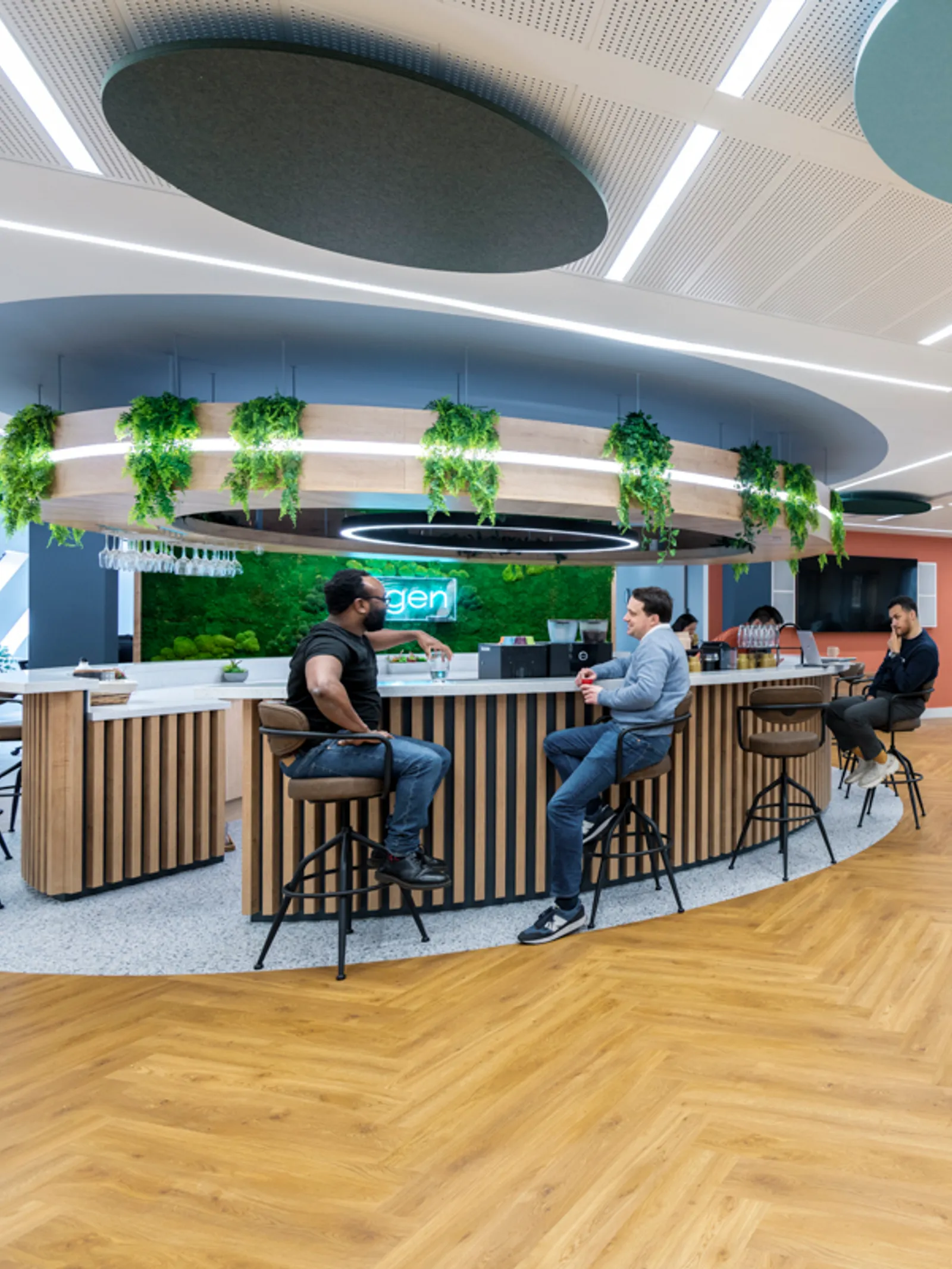


By the time The Office first aired on July 9th 2001, the workplace was already changing.
Two decades on, the shifts have been seismic. Offices have evolved from rows of identical desks and clattering typewriters to fluid, hybrid spaces where collaboration often happens online. And while the sitcom’s paper‑pushing chaos became cultural shorthand for office life, the reality has been a far more radical transformation.
This year marks 25 years since workplace design specialist Area opened its doors – and with it, a quarter‑century of witnessing, shaping and sometimes predicting how Britain’s work culture has evolved.
From hierarchical 1950s boardrooms to AI‑responsive offices of the future, here’s the story of how our workspaces have transformed – and what’s coming next.

1950s–1980s: Suits, Smoke and Status
The post‑war office was a place of order. Desks were assigned, roles were fixed, and the boss’s corner office – with a larger desk and a private door – was the ultimate badge of status. Smoking indoors was standard. Comfort and wellbeing barely featured in the design brief.
“Offices were designed like institutions,” says Gary Chandler, CEO of Area’s parent company, Fourfront Group. “They were about hierarchy and control – not collaboration or creativity.”

1990s–2000s: The Digital Disruption
The arrival of email, laptops and Wi‑Fi rewired the workplace. Cubicle walls began to come down. Large HQs and sprawling suburban campuses defined corporate identity. International brands set up UK bases, and global travel for work became more common.
By 1999 – the year Area was founded – open‑plan offices were gaining traction. Accessibility laws began to reshape inclusion in design. Workplaces became more varied, but the focus was still on physical presence.
2010s: Coworking, Wellbeing and the Google Effect
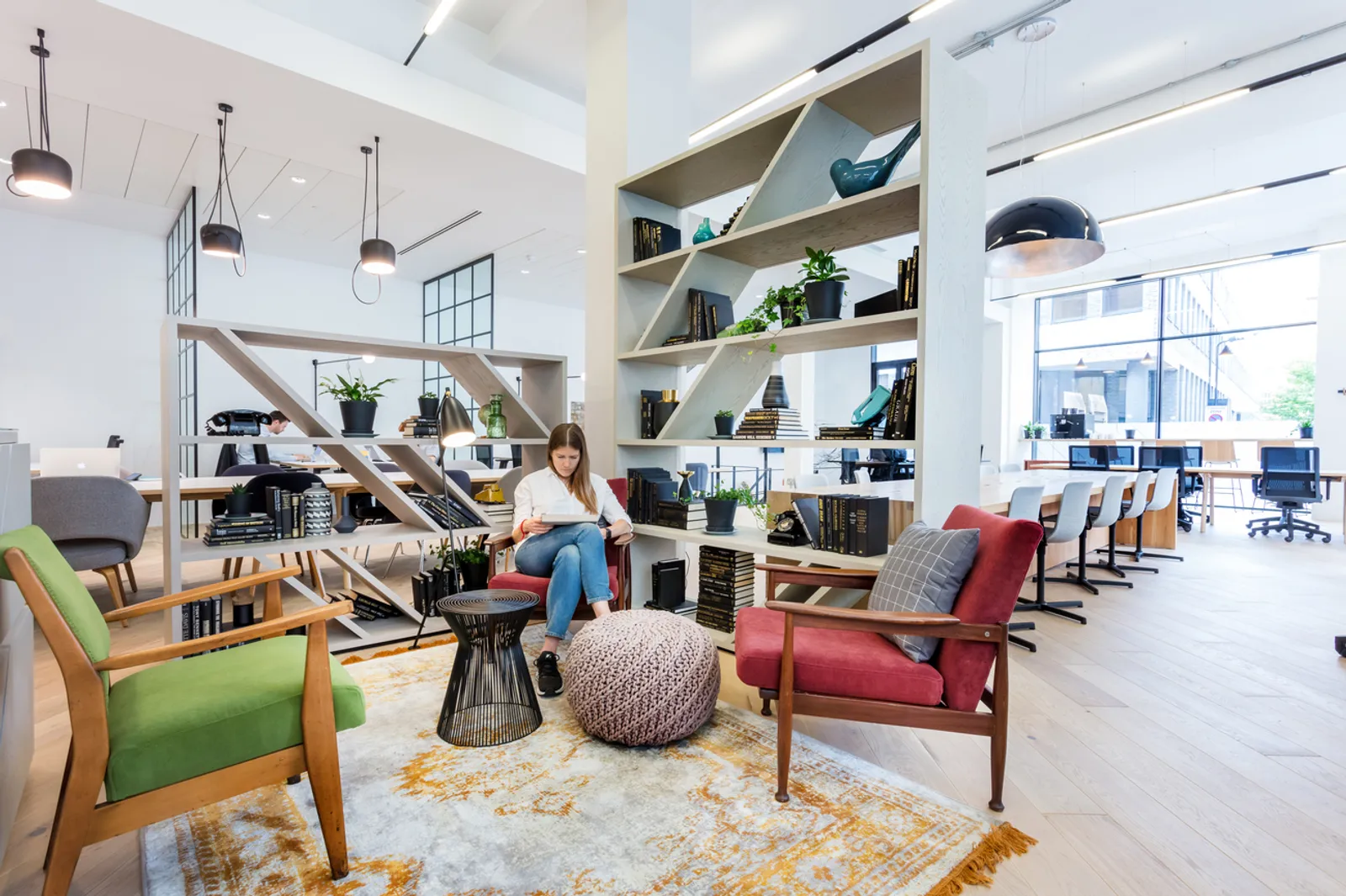
Then came the coworking revolution. Spaces like WeWork injected a lifestyle aesthetic into the office: greenery, soft furnishings, coffee bars. The workplace became a brand statement.
“Wellbeing became business‑critical,” says Gary Chandler at Area. “It wasn’t enough to have a desk and a PC. People expected light, nature, comfort, spaces for focus, spaces for connection.”
Sustainability emerged as a serious driver, with recycled materials and carbon‑footprint measurement becoming the norm. Design began to reflect employee needs: quiet zones, mother’s rooms, better food options. Neurodiversity and inclusion entered the design vocabulary.

2020s: Hybrid, Home‑from‑Home
The pandemic turbo‑charged hybrid work. Kitchen tables became workstations overnight. When offices reopened, they had to justify their existence.
“The office stopped being somewhere you had to be,” says Gary Chandler at Area. “It became somewhere you wanted to be – a place to connect with people and culture.”
More soft seating, fewer assigned desks. More phone booths, fewer filing cabinets. Leases shortened, footprints became flexible. The aesthetic shifted towards residential calm: muted colours, textured materials, biophilia.
Lessons from 25 Years in Workplace Design
Open‑plan isn’t a silver bullet – people need choice, not uniformity
Design must serve everyone – inclusivity and neurodiversity are non‑negotiable
Wellbeing is now business‑critical – comfort and culture retain talent
Your office is your culture board – design is a recruitment tool

The Office of 2050: Nature, Neurodiversity and No Desks
So what comes next? For Area’s designers, the future of work isn’t about more technology – it’s about more humanity.
2050’s workplace could feature:
AI‑responsive environments that adjust light, temperature and acoustics to your mood to biohack employee wellbeing
Indoor forests and water features – biophilia taken to its most immersive form
Holographic collaboration – meetings without borders or time zones
No fixed desks – instead, adaptable pods, lounges and shared creative zones
Offices as ecosystems – blending work, social, and wellness spaces seamlessly
“The next office isn’t more digital – it’s more human,” says Chandler. “If AI is doing the grunt work, the workplace has to do the human work: creativity, collaboration, connection.”
Design Challenges Ahead
By 2050, designers may be solving problems we can already see on the horizon:
Digital fatigue – creating calm spaces in a hyper‑connected world
Loneliness – giving remote workers community
Overstimulation – offering sensory balance in immersive tech environments
Ethics of AI – protecting data when your workspace knows more about you than you do
From Cubicles to Culture Platforms
In the end, the office’s evolution reflects society itself. From rigid hierarchies to flexible communities, from typewriters to telepresence, our workplaces have become mirrors of our values.
And if the cubicle was our cave, tomorrow’s office may be our forest – a living, breathing environment where work blends effortlessly with life.