
Creating a workplace that feels open, accessible, and welcoming to everyone is no longer an aspiration; it is an expectation. Modern workplaces are obligated to recognise the diverse needs of the workforce as well as their clients, customers and any other stakeholders.
Spaces no longer only need to be compliant with laws and regulations but must also be thoughtfully designed, with employee comfort and usability in mind. Workplaces that do not cater to a diverse workforce and fail to consider inclusivity in their setup risk missing out on attracting top talent, losing their best employees, and even potentially damaging their reputation.
Done well, and designing workplaces with inclusivity in mind has the power to support productivity, reduce stress, and attract and retain talent in increasingly competitive markets.
This guide provides a comprehensive framework for businesses that want to go beyond minimum standards. It explores the principles of inclusive design, outlines accessibility requirements, explains how to accommodate neurodiverse employees, and showcases real-world examples from both Area’s portfolio and wider industry leaders.
What Is Inclusive Office Design?
Inclusive office design is centred around creating workplaces that promote a sense of belonging for a workforce with diverse needs.
People with all abilities, backgrounds, ethnicities, religious beliefs, disabilities and mental health needs should be able to access a workplace that has been designed for inclusion, use it and feel comfortable in it. It is the next step up from accessibility, which tends to focus on how people with physical limitations can access a space and considers a wide range of human differences, including age, gender, culture, religion, and neurodiversity.
At its core, inclusive office design strives to break down barriers that could make spending time in a physical space uncomfortable for some people, and ensures that they are able to contribute fully in any setting. Inclusive office design, for example, may consider integrating flexible or modular furniture that can be easily moved or reconfigured to accommodate different body types.
It could also incorporate spaces that cater to different and changing needs, such as quiet zones that are built to minimise sensory stimulation, or the provision of a range of facilities that reflect cultural inclusivity such as prayer rooms or gender-neutral toilets.
A well-designed inclusive workplace aligns with broader organisational goals. It supports equality, demonstrates a commitment to ESG responsibilities, and enhances employer branding by showing a clear dedication to diversity and wellbeing.
Inclusive Design Principles in the Workplace
The foundation of inclusive office design lies in the application of recognised inclusive design principles. These inclusive design principles have their roots in universal design, but have evolved to create environments that are more focused on becoming equitable, flexible, and user-friendly for all. Applied to the workplace, seven core principles stand out:
| Principle | Description & Examples |
| Equitable use | Spaces and facilities should be designed so that they are accessible and appealing to everyone, without stigmatising particular groups. Step-free access, automatic doors, and accessible technology are prime examples. |
| Flexibility in use | Workstations, meeting rooms, and social areas should adapt to individual preferences. Adjustable desks, ergonomic chairs, and modular furniture systems allow employees to tailor their environment to their personal needs and preferences. |
| Simple and intuitive use | Navigation and technology should be straightforward. Clear signage, tactile wayfinding, and easy-to-use booking systems reduce stress and confusion. |
| Perceptible information | Key information must be communicated effectively regardless of sensory ability. Braille, high-contrast visuals, hearing loops, and captioned AV tools all support this. |
| Tolerance for error | Workplaces should reduce risks of accidental misuse or harm. For example, safe furniture edges, slip-resistant flooring, and ergonomic layouts protect employees. |
| Low physical effort | Daily tasks should not demand unnecessary energy. Automatic lighting, sensor-based taps, and well-placed amenities all support physical ease. |
| Size and space for approach and use | Everyone should be able to move and work comfortably. Wide corridors, height-adjustable counters, and inclusive breakout areas are essential. |
A truly inclusive workplace will not simply work through these principles as part of a box-ticking exercise. Instead, they will draw upon the lived experience of employees and rigorously test designs, gather feedback and act upon it, and commit to adapting and improving the workplace over time, according to changing needs.
Organisations that truly embrace the principles of inclusive office design reap the benefits of doing so, with many reporting a direct link to improved employee satisfaction and overall business performance.
Why Inclusive Office Design Matters
An inclusive workplace is more than a matter of compliance. It directly influences well-being, productivity, and employee retention. Research from the British Council for Offices shows that employees who feel supported by their physical environment are more engaged, more productive, and less likely to leave. For organisations facing the high costs of recruitment and turnover, this connection is critical.
Inclusive office design also aligns with broader ESG objectives. By providing equal access and supporting diverse needs, businesses demonstrate a commitment to social responsibility. This can strengthen employer branding, enhance reputation among clients and investors, and meet the expectations of younger generations who increasingly prioritise inclusivity in their choice of employer.
On a practical level, inclusive design reduces barriers to work, improving collaboration across teams. It can support mental health by reducing environmental stressors, and it can broaden the talent pool by ensuring that people with varying needs can contribute effectively.
Meeting Office Accessibility Requirements
In the UK, legal and regulatory frameworks shape the minimum requirements for accessible workplaces. The Equality Act 2010 mandates that employers must make reasonable adjustments for employees with disabilities. For physical environments, BS8300 provides detailed guidance on inclusive building design, covering elements such as entrances, sanitary facilities, lighting, and signage.
Practical considerations include:
Step-free access: Ramps, wide doorways, and lifts are essential.
Accessible signage: High-contrast visuals, braille, and tactile maps aid navigation.
Hearing support systems: Hearing loops and captioned AV content ensure inclusion in meetings.
Sanitary facilities: Accessible toilets with adequate turning space, support rails, and emergency alarms.
Lighting and acoustics: Even glare-free lighting and sound management systems reduce stress and support concentration.
An accessibility audit is a sensible starting point for any workplace redesign that is hoping to improve its inclusivity. Doing so ensures compliance with regulations as a baseline, but can also highlight opportunities to exceed basic standards and create an environment where employees feel genuinely and proactively supported.
Designing for Neurodiversity
Around 15 to 20 percent of the global population is considered neurodiverse, encompassing conditions such as autism, ADHD, dyslexia, and dyspraxia. This translates to a very real need for companies to consider this population in their workplace designs.
Office environments that aren’t designed for these individuals mean that they could be missing out on a huge cohort of potential talent. Yet with some consideration and thought into the design of the workplace, people with differing needs may feel more confident in approaching companies or applying for advertised positions.
Inclusive office design for neurodiversity means creating environments that reduce sensory overload and offer flexibility. Examples include:
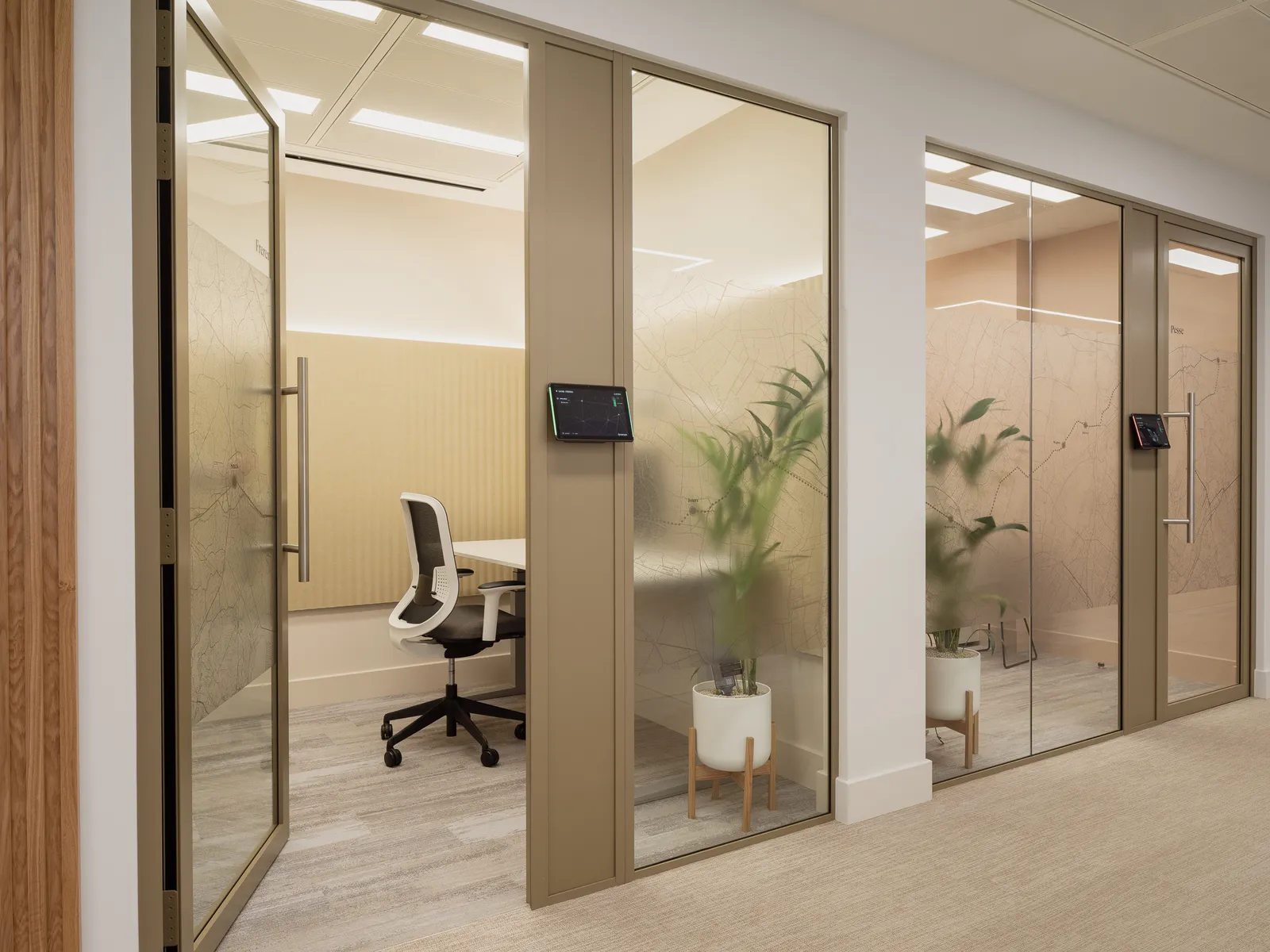
Quiet rooms and acoustic pods for focused work.
Sensory-friendly lighting that avoids harsh glare or flicker.
Zoned layouts that separate high-traffic areas from quieter spaces.
Colour palettes that reduce overstimulation.
Choice of working environments — from collaborative spaces to calm, restorative areas.
World-renowned companies such as Microsoft and Deloitte are already leading the charge, demonstrating the notion that inclusive office design is the future. Both businesses have rolled out neurodiversity hiring initiatives and have taken steps to ensure their office environments enable all individuals to thrive. At Area, our projects have incorporated acoustic solutions, flexible workstations, and sensory considerations to create spaces that feel welcoming for all.
By investing in neurodiverse-friendly design, businesses can unlock productivity gains, foster innovation through diverse perspectives, and demonstrate a meaningful commitment to inclusion.
Inclusive Facilities & Amenities
An inclusive office, however, isn’t just about mood lighting and adjustable office chairs. The communal spaces, such as kitchens and toilets, must also be adjusted to accommodate all. Contemporary workplaces may now offer gender neutral toilets as standard, or have prayer and meditation rooms to allow employees of different faiths to practice during the workday.
Wellness spaces can support employees seeking some quiet, and lactation rooms provide privacy for parents. Social areas such as kitchens and breakout rooms must also be designed with inclusivity in mind and designed for accessibility for all.
Inclusive Design Examples in the Workplace
Real-world examples demonstrate the tangible impact of inclusive office design. Below are examples of some of our in-house projects, as well as examples of wider industry case studies highlighting what is possible when inclusivity is embedded into the design process.
Area Project: Turing Building
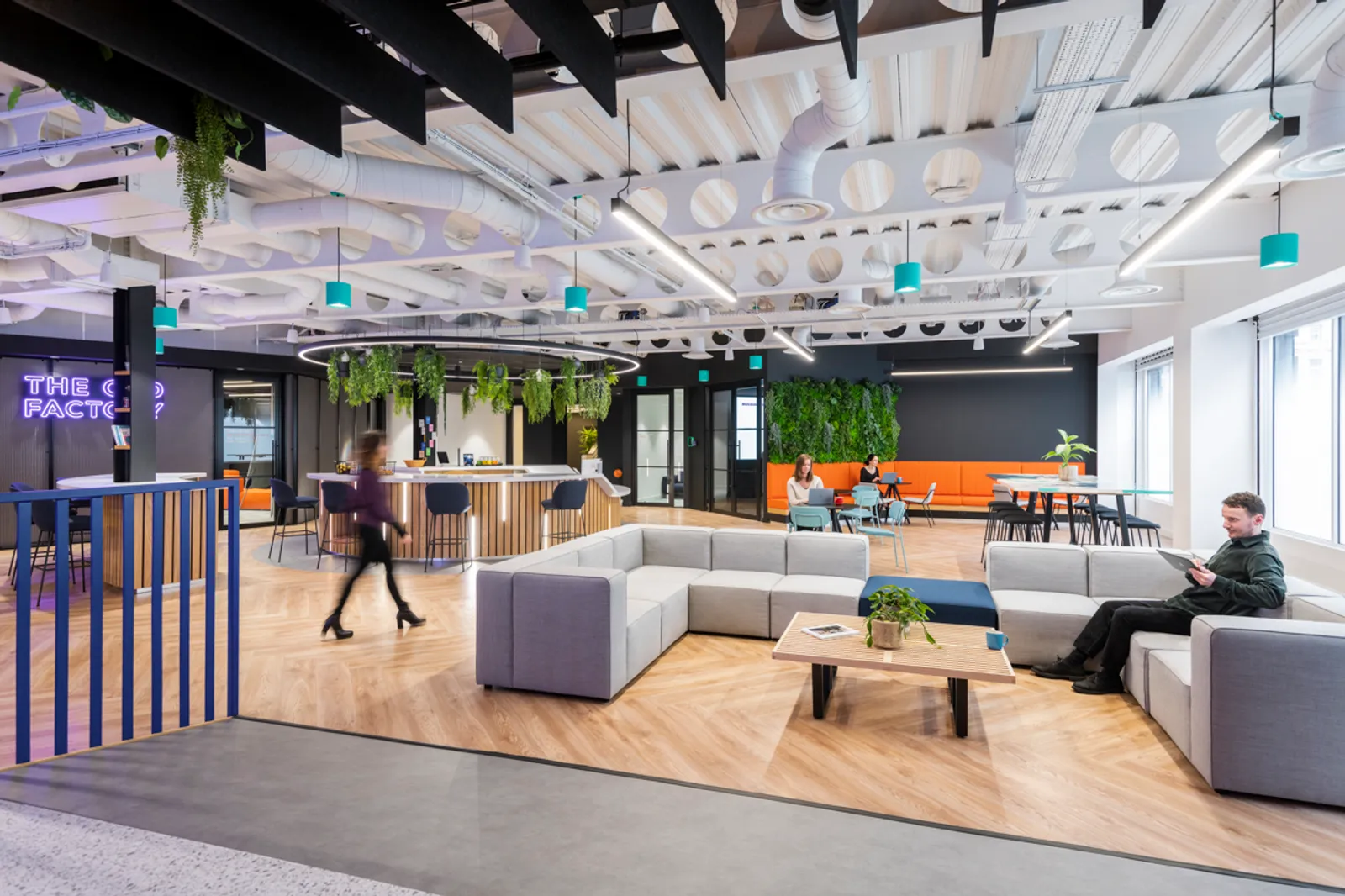
The design of The Turing Building by Area placed strong emphasis on inclusivity and wellbeing, creating spaces that catered to a wide variety of needs and working styles. Lounge TwentyOne features mindfulness and wellness rooms for recharging, flexible event spaces and breakout areas that encourage both collaboration and quiet focus, and a beautifully landscaped rooftop terrace offering a calming outdoor retreat.
Carefully considered mood lighting, layered textures, and warm, tactile finishes further enhanced comfort and atmosphere, ensuring that the environment felt welcoming, balanced, and supportive for all occupiers.
These examples show that inclusivity can be seamlessly integrated into high-performing, visually striking workspaces. Rather than being treated as an afterthought, inclusive features become part of the design language, supporting both functionality and brand identity.
Digital Accessibility in the Workplace
While much focus falls on physical environments, digital accessibility is equally important, particularly in light of emerging technologies and the advancements in AI. Hybrid working, digital booking systems, and collaboration platforms mean that offices are increasingly mediated through technology.
Old, inaccessible systems or offices without the latest technology integrated into their design could exclude employees and make it challenging to provide a level playing field for everyone to thrive in the workplace.
Best practices include:
Accessible meeting tools – Providing live captioning, transcription, and screen reader compatibility for hybrid meetings.
Inclusive booking platforms – Room and desk booking software should meet accessibility standards, allowing employees with visual or cognitive impairments to use them independently.
AV captioning – All video content, training materials, and internal communications should be captioned and, where possible, translated into multiple languages.
Accessible documents – Internal policies and presentations should be structured for screen readers, with clear alt text for images.
Area’s workplace strategy teams have helped clients implement digital accessibility alongside physical design. By ensuring that AV systems, software, and booking platforms are accessible, organisations can create a seamless experience for employees, regardless of ability or location.
Wayfinding, Signage & Sensory Design
Wayfinding and signage can also be ill-considered in non-inclusive office designs. For those looking to create an inclusive environment, however, these elements are crucial. Clear navigation fosters independence and reduces anxiety, helping all employees to make their way through the workplace with confidence and ease.
Inclusive wayfinding strategies include:
Braille and tactile signage for lifts, meeting rooms, and facilities.
High-contrast colour schemes to support employees with visual impairments.
Tactile floor indicators and maps that help guide navigation in large spaces.
Acoustic cues that aid orientation in open-plan areas.
Logical layouts with clear zoning for collaborative, quiet, and social areas.
Summary Table: Inclusive Office Design Features vs Benefits
To provide a clear overview, the table below highlights how inclusive features translate into tangible business outcomes.
Inclusive Design Feature | Practical Example | Primary Benefit | Business Impact |
Step-free access & wide doorways | Ramps, automatic doors | Physical accessibility | Legal compliance, wider talent pool |
Ergonomic & adjustable furniture | Sit-stand desks, ergonomic chairs | Comfort for diverse needs | Reduced absenteeism, improved wellbeing |
Sensory-friendly design | Acoustic pods, glare-free lighting | Support for neurodiverse employees | Productivity boost, stronger inclusion |
Inclusive facilities | Gender-neutral toilets, prayer rooms | Cultural and gender inclusivity | Higher satisfaction, better retention |
Wayfinding & signage | Braille, tactile maps, high-contrast visuals | Accessible navigation | Greater autonomy, employee dignity |
Digital accessibility | Captioned AV, screen reader tools | Inclusion in hybrid work | Better collaboration, reduced exclusion |
Biophilic & sustainable design | Natural light, greenery | Wellbeing and ESG alignment | Positive branding, stronger ESG reporting |
Quiet & wellness spaces | Relaxation rooms | Mental health support | Lower stress, higher engagement |
This table provides a scannable summary for decision-makers, reinforcing the practical and commercial value of inclusivity.
FAQs About Inclusive Office Design
What is inclusive office design?
Inclusive office design creates workplaces that are accessible, flexible, and welcoming for all employees. It goes beyond compliance, supporting diversity, wellbeing, and productivity.
What are the principles of inclusive design in the workplace?
The seven core principles include equitable use, flexibility, intuitive design, perceptible information, tolerance for error, low physical effort, and adequate size and space. Applied to offices, this means features like step-free access, ergonomic furniture, sensory-friendly lighting, and clear signage.
How do you make an office more accessible?
Begin with an accessibility audit. Provide ramps, lifts, wide corridors, accessible toilets, braille signage, and hearing support systems. Compliance with the Equality Act 2010 and BS8300 should be the baseline, with additional features added to enhance inclusivity.
What are examples of inclusive office facilities?
Inclusive facilities include gender-neutral toilets, prayer or meditation rooms, lactation spaces, quiet rooms, and wellness areas. These facilities demonstrate respect for cultural, religious, and lifestyle needs.
Why is inclusive design important in workplaces?
It improves well-being, boosts productivity, helps retain talent, ensures legal compliance, and strengthens employer reputation. Inclusivity also aligns with ESG responsibilities, supporting both social impact and brand value.
How does inclusive design support neurodiverse employees?
Neurodiverse-friendly offices offer quiet zones, acoustic pods, sensory-sensitive lighting, and varied workspace choices. These features reduce stress, improve concentration, and enable individuals to work in ways that best suit them.
Turning Inclusive Design Into Lasting Value
At Area, our expert team can work with yours to help create an office design that works for everyone. If your workspace isn’t designed to support the needs of a diverse workforce they risk excluding a huge cohort of potential employees and risk legal complications as well as a decline in business performance and brand reputation.
The evidence is clear: inclusive environments drive stronger organisations. So if you are ready to see how we can embed inclusivity into your new office design, get in touch today. By combining strategic insight with technical expertise, we help businesses create spaces where every employee feels valued and able to thrive.
Explore our office design services, and case studies to see how inclusive design can transform your workplace.