

Workplace demographics are shifting due to delayed retirement ages and early career starts. For the first time, UK offices host up to five distinct generations. This ranges from the seasoned experience of Baby Boomers to the digital fluency of Generation Z, and soon, Generation Alpha.
For business leaders, this creates a specific operational challenge: creating a cohesive workplace strategy that serves diverse needs without alienating any single group. A workspace that accommodates different life stages drives productivity and improves staff retention rates.
This article analyses how to navigate these differences through strategic spatial planning.
1. Who are the generations in today's workplace?
To design an effective workspace, we must first deeply understand who inhabits it. While we should avoid rigid stereotypes, understanding the formative experiences and general work styles of each cohort helps us build a baseline for inclusivity.
The Generational Cohorts
Baby Boomers (approx. 1946–1964):
This group often values stability and face-to-face communication. They tend to prefer structured environments and may prioritise acoustic privacy for focused work. They often view the office as a location for professional concentration rather than socialisation.
Generation X (1965–1980):
Often called the "bridge builders," Gen X workers are typically independent and pragmatic. They were early champions of work-life balance. In design terms, they seek efficiency, requiring a functional mix of private focus spaces and effective meeting zones.
Millennials (1981–1996):
Purpose-driven and collaborative, Millennials drove the Experience Economy in the office. They favour communal areas, workplace wellness features, and tech-enabled spaces that allow for fluid movement. For this cohort, the office serves as a social hub.
Generation Z (1997–2012):
As true digital natives, Gen Z expects a seamless technologically designed office to work without failure. They have a low tolerance for friction but highly value in-person mentorship. They expect strong sustainability credentials and inclusive, multi-purpose environments that mirror "third places" such as coffee shops.
Moving Beyond Stereotypes
While these profiles are useful starting points, they are not absolute. A Gen Z employee might crave a quiet library space for deep coding work, just as a Boomer might thrive in a buzzing breakout area during a brainstorm. The key is moving away from "age boxes" and moving toward choice-based design. By providing a variety of settings, you empower individuals to select the environment that supports their current task, rather than their birth year.

2. What are the core principles of inclusive design?
Inclusive design requires a foundation of flexibility, equity, and sensory control. It involves removing physical, digital, and sensory barriers to performance. If this sounds like a big task, involving a workplace consultant, who will review your business and all your business needs, making it easier to know what you might need.
Flexibility via Modular Furniture
Fixed layouts struggle to accommodate a diverse workforce. Agile working environments rely on "hackable" spaces. We recommend modular furniture systems, movable partitions, and tables on castors. This allows teams to reconfigure their footprint instantly. It caters to the Millennial desire for collaboration and the Gen X need for autonomy simultaneously.
To make this easier, consult an office furniture designer to help with pulling out exactly what is needed.
Human-Centred & Neurodiverse Design
Inclusivity intersects with neurodiversity and accessibility. A 60-year-old employee and a 25-year-old may both find harsh fluorescent lighting or high decibel levels difficult.
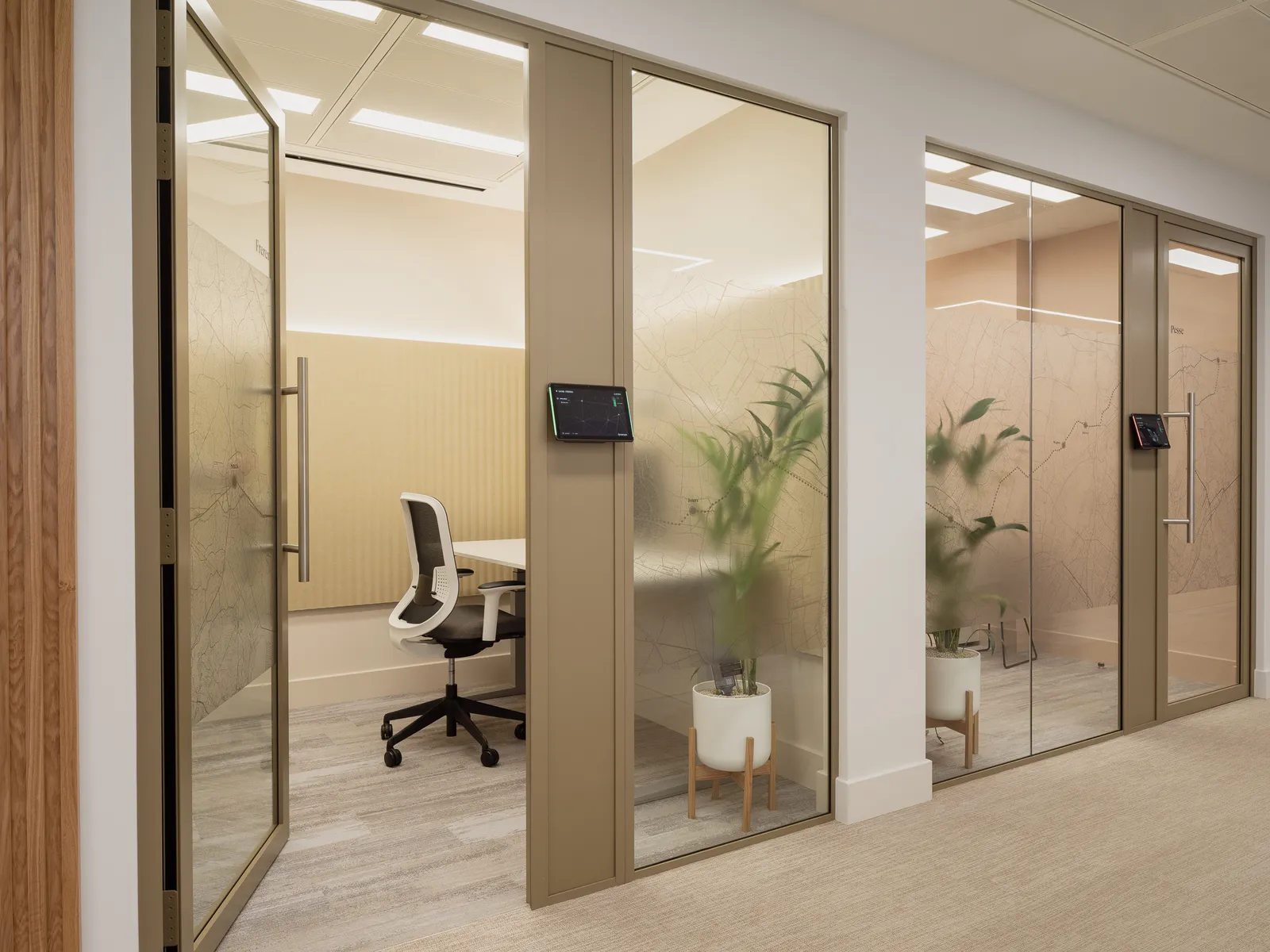
Sensory Control: Implement dimmable LEDs and distinct acoustic zones. Separate high-stimulus social areas from low-stimulus quiet zones to allow for self-regulation.
Accessibility: Ensure DDA compliance with wide corridors, clear wayfinding with high-contrast signage, and automatic doors.
Office design is not a one-size-fits-all exercise, so making sure neurodiversity in the workspace is also considered, as well as age, is incredibly important.
Physical Comfort
Well-being is a priority across all demographics. Physical comfort is non-negotiable. This includes high-quality HEPA air filtration, individual thermal controls, and accessible hydration stations. If these basic physiological needs go unmet, employee engagement declines.

3. How do we design zones for different needs?
To cater to different working styles, the modern office must abandon the "one-size-fits-all" open plan and instead offer a diverse "palette of places."
Focus and Quiet Zones
High noise levels are the single most common complaint in open-plan offices, particularly among older generations or those doing complex analytical work.
Implement designated quiet zones where conversation is prohibited. Use high-backed acoustic sofas, enclosed focus pods, and sound-masking technology to reduce speech intelligibility distractions.
Understanding and using office acoustics is going to ensure you can create spaces for everyone, for every need.
Collaboration and Innovation Areas
For Millennials and Gen Z, social learning and rapid collaboration are vital. These spaces need to be energetic and friction-free.
Create project rooms with floor-to-ceiling writable walls, agile furniture that allows for standing or sitting, and integrated power data in tables to keep sessions moving without technical interruptions.
Perhaps considering a rising 2025 office trend of digital detox zones, to help support staff wellbeing and concentration levels.
Social and Community Spaces
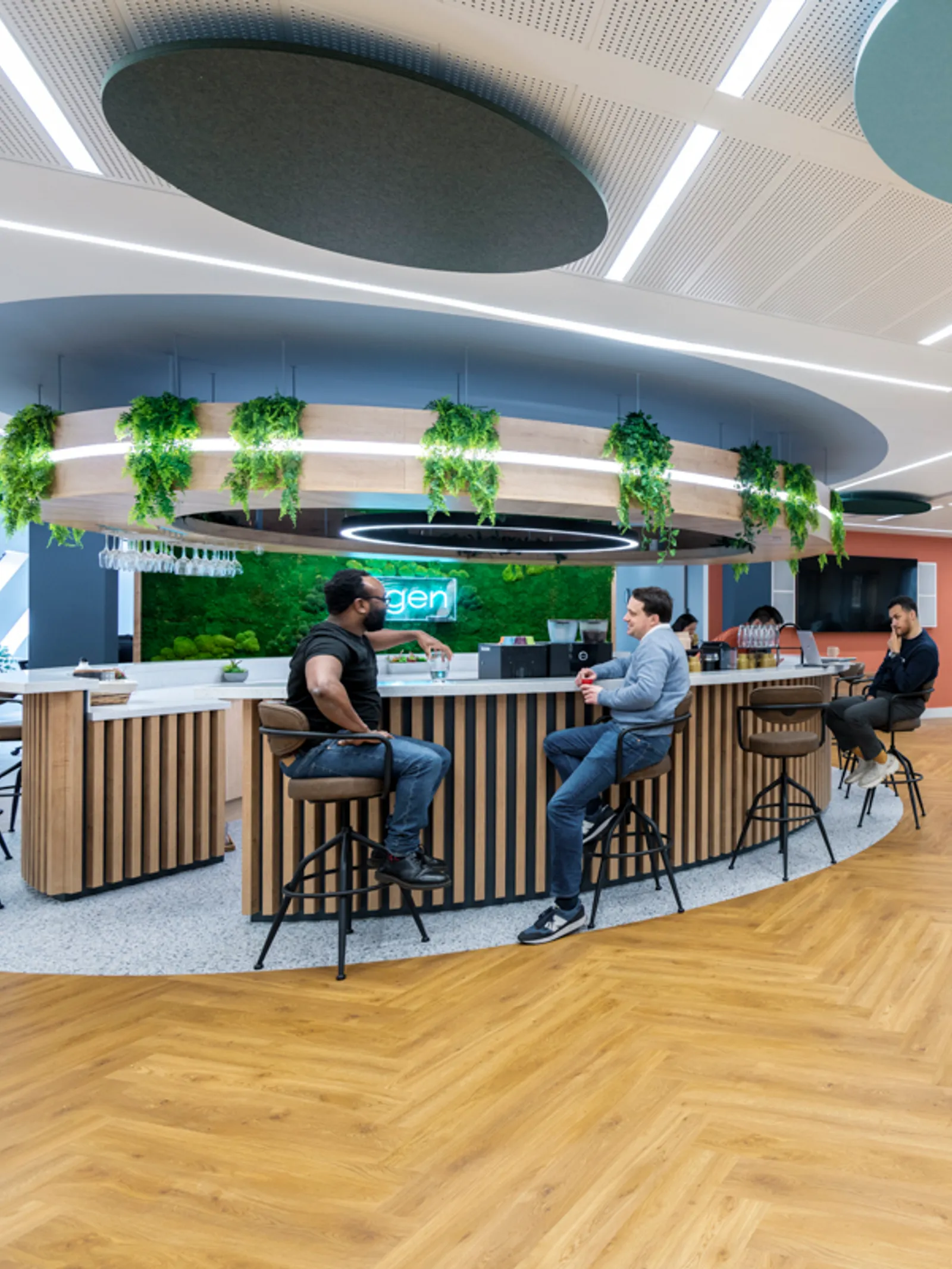
Coffee lounges and breakout areas act as the "village green," breaking down silos and encouraging organic interaction. This is where the most valuable cross-generational mentorship happens, over a coffee, away from the hierarchy of the boardroom.
Design Solution: Design these areas with a residential feel using softer lighting and comfortable seating to encourage lingering and informal relationship building.
Hybrid-Ready Meeting Environments
Hybrid office design is already a working staple for Gen X and Millennials; especially, meeting rooms must be video-ready to ensure equity for remote participants.
- Design Solution: Move beyond the "bowling alley" table. Use D-shaped tables where everyone faces the screen, and install high-quality microphones and cameras that frame individual faces, ensuring remote colleagues feel present.
4. How can technology bridge the generational gap?
Technology can be a great divider or a great equaliser. The goal is an intuitive infrastructure that requires a zero learning curve, accommodating those who grew up with typewriters and those who grew up with touchscreens. Utilising technology in office design does not have to make it a futuristic office; adding simple integrations will help your workspace stay connected and intuitive.
Intuitive Plug-and-Play Interfaces
Complexity creates anxiety. Meeting room tech should be a "one-touch" start. Avoid complex control panels; instead, opt for simple interfaces and clear, non-technical signage that guides users on how to connect their devices instantly.
Smart Building Infrastructure
Smart lockers, app-based desk booking, and automated climate control appeal to digital natives while streamlining the experience for everyone. However, it is crucial to provide analogue backups or manual overrides to ensure no one feels "locked out" by a system failure or a lack of digital confidence.
Seamless Tech Integration
Technology should support the work, not dominate the room. Concealed cable management, wireless charging spots built into surfaces, and screens that double as digital art when idle prevent the office from feeling like a sterile server room, maintaining a warm, human aesthetic.

5. Which furniture and materials support longevity?
Ergonomics for All Ages
As we work later in life, physical support becomes critical. Musculoskeletal health is a major concern for ageing, and the “corporate prawn” trend on TikTok means people are more and more concerned with fixing their posture.
Adding ergonomic office furniture does not have to be difficult or expensive. Standardising sit-stand desks will encourage movement. Investing in highly adjustable task chairs with lumbar support and considering monitor arms will allow screens to be positioned at the correct eye level to reduce neck strain for all heights and eyesight levels.
Biophilic Design Principles
Connecting with nature reduces stress, lowers blood pressure, and improves cognitive function across all age groups. Not only do biophilic office designs look nice, but they also help enhance workplace well-being and boost staff performance.
Go beyond a few potted plants. Incorporate living walls, natural timber finishes, and stone textures. maximise natural light penetration by placing enclosed rooms at the core of the building and leaving window perimeters open for desks and social spaces.
Sustainable Materiality
While Gen Z often leads the conversation on climate, sustainability is now a corporate imperative valued by all employees.
- Design Solution: Use materials with high recycled content, low-VOC paints to improve air quality, and furniture that is designed for circularity (repairable and recyclable). This signals to your workforce that the company is responsible and forward-thinking.

6. How do you manage culture and policy changes?
The physical space is only half the equation. To truly support a multi-generational workforce, you must engage them in the process of change.
Workforce Consultation
Engagement breeds ownership. Run surveys, focus groups, or design workshops to understand the specific demographics and "pain points" of your unique teams. When employees feel heard, they are far more likely to adopt new ways of working.
Inter-Generational Mentorship
Use your new social spaces to launch specific programmes. "Reverse mentoring," where Gen Z shares digital skills or cultural trends while Boomers share industry wisdom and soft skills, can be highly effective in building mutual respect.
Clear Policy and Culture
Friction often arises from unwritten rules. Ensure your policies on hybrid work, desk usage (clean desk policies), and quiet zone etiquette are communicated clearly during onboarding. This removes ambiguity and sets a standard of respect that applies to everyone, regardless of tenure.

7. Future-Proofing: Preparing for Gen Alpha and the ‘Sentient’ Office
What is the future of the multi-generational workplace? The future workplace is not a static location but a "sentient" ecosystem that uses data and AI to adapt to human needs in real-time. As we prepare for the arrival of Generation Alpha (those born after 2010), office design must evolve from "hybrid-friendly" to fully immersive, blending physical space with digital overlays, a concept often called the Phygital Workplace.
To future-proof your office assets and ensure longevity, your design strategy must focus on three core pillars:
1. The Rise of the ‘Phygital’ Environment
Gen Alpha will be the first generation to view the physical and digital worlds as a singular continuum. They will expect the office to be as responsive and intuitive as the gaming interfaces they grew up with.
Immersive Collaboration: Meeting rooms will evolve into Virtual Reality (VR) suites and Augmented Reality (AR) zones, allowing remote avatars to sit "in the room" alongside physical colleagues.
Gamification of Space: Workplaces may utilise gamified feedback loops via workplace apps, rewarding collaboration or sustainable behaviours (like recycling or energy saving) with digital perks.
2. Hyper-Personalisation via PropTech
We are moving away from fixed layouts toward adaptive architecture powered by PropTech (Property Technology). The office of 2030 will function as an "on-demand" service. There is no one best office layouts, so consider these for a future-proofed office.
IoT and Smart Sensors: Internet of Things (IoT) sensors will track occupancy heatmaps, automatically adjusting HVAC systems and Circadian Lighting to optimise energy efficiency and employee focus levels.
AI-Concierge Services: Instead of manual booking, a Workplace Experience App will curate an employee’s day, suggesting a specific sit-stand desk or quiet focus pod based on their schedule and preferences.
3. Radical Sustainability & ESG
While Gen Z champions sustainability, Gen Alpha will view it as a baseline requirement. Future-proofing requires a commitment to Net Zero operations and the Circular Economy.
Material Passports: Furniture and fit-outs will increasingly require "passports" detailing their carbon footprint and recyclability, ensuring materials can be reused rather than sent to landfill.
Regenerative Design: Offices will move beyond simply doing "less harm" to actively improving the environment through biophilic air filtration (living walls) and energy-positive building materials
Are you ready to embrace the future?
Designing for a multi-generational workforce isn't about compromising; it is about expanding choice. By focusing on inclusivity, flexibility, and well-being, you create a workspace where an entry-level graduate and a senior director can both perform at their best. The result is a vibrant, resilient culture that leverages the unique strengths of every generation.
Ready to transform your workspace? Whether you are looking to refurbish your current space or relocate to a new hub, understanding the costs and requirements is the first step.